
Access Chattanooga Family Court Records
Chattanooga Family Court Records are kept through Hamilton County, not Chattanooga City Court. The city court handles traffic citations, parking issues, and city ordinance violations. Family law files such as divorce decrees, custody orders, parenting plans, child support records, and adoption papers are handled by Hamilton County Circuit Court and Chancery Court. If you need the real case file, start with the county record offices and the county government site. That is the direct path to the paper you need.
Chattanooga Family Court Records Quick Facts
Where To Find Chattanooga Family Court Records
Hamilton County holds the family case files that Chattanooga residents usually need. The county government says it maintains open records policies and follows Tennessee public records rules. Family law matters are handled by Hamilton County Circuit Court and Chancery Court. That is where divorce, custody, and support records live. The city court is separate. It does not keep those files, and it cannot replace the county clerk when you need a decree or a custody order.
The city court page is still useful because it confirms what the municipal court does and does not handle. If your request is about family law, you want the county side. The county government page gives you the broader public records framework. The Tennessee courts site and state archives help when you need appellate history or older records that no longer sit at the front desk.
Hamilton County’s court system includes Circuit Court, Chancery Court, Criminal Court, General Sessions Court, and Juvenile Court. The family record path runs through Circuit and Chancery. Juvenile records are confidential. That distinction matters in Chattanooga, because some records can be requested by the public while others cannot. If you do not know which court has the file, start with the county clerk office and ask where the case was filed.
Chattanooga Municipal Court And Family Law
Chattanooga City Court does not handle family law cases. It is a municipal court. Its job is city ordinance and traffic work. That means a request for a divorce decree or custody file belongs elsewhere. In practice, that means the Hamilton County courts. The Circuit Court Clerk listed in the city research is Larry L. Henry, and the office address is 600 Market St, Room 102, Chattanooga, TN 37402. That is the office to use when you need the county record trail.
The county record rules are standard Tennessee rules. Public access is broad, but not total. Under T.C.A. § 10-7-503, government records are generally open. Under Tennessee court access rules, a judge can seal or restrict a file when privacy outweighs the public right to know. That is often how adoption and juvenile matters are treated. The record may still exist even when the public copy is limited.
See the municipal side at Chattanooga City Court and the county side at Hamilton County Government. For a broader explanation of why family records are open in many cases but sealed in others, the CTAS guidance is a strong reference.
Chattanooga also sits inside the state appellate system. If a family case was appealed, Tennessee court resources may show the later history even after the county file has been pulled back to storage. That can help if you need the next step in a long-running family matter.
This Chattanooga image comes from Tennessee courts and matches the local county court research that Chattanooga residents use for family law records.
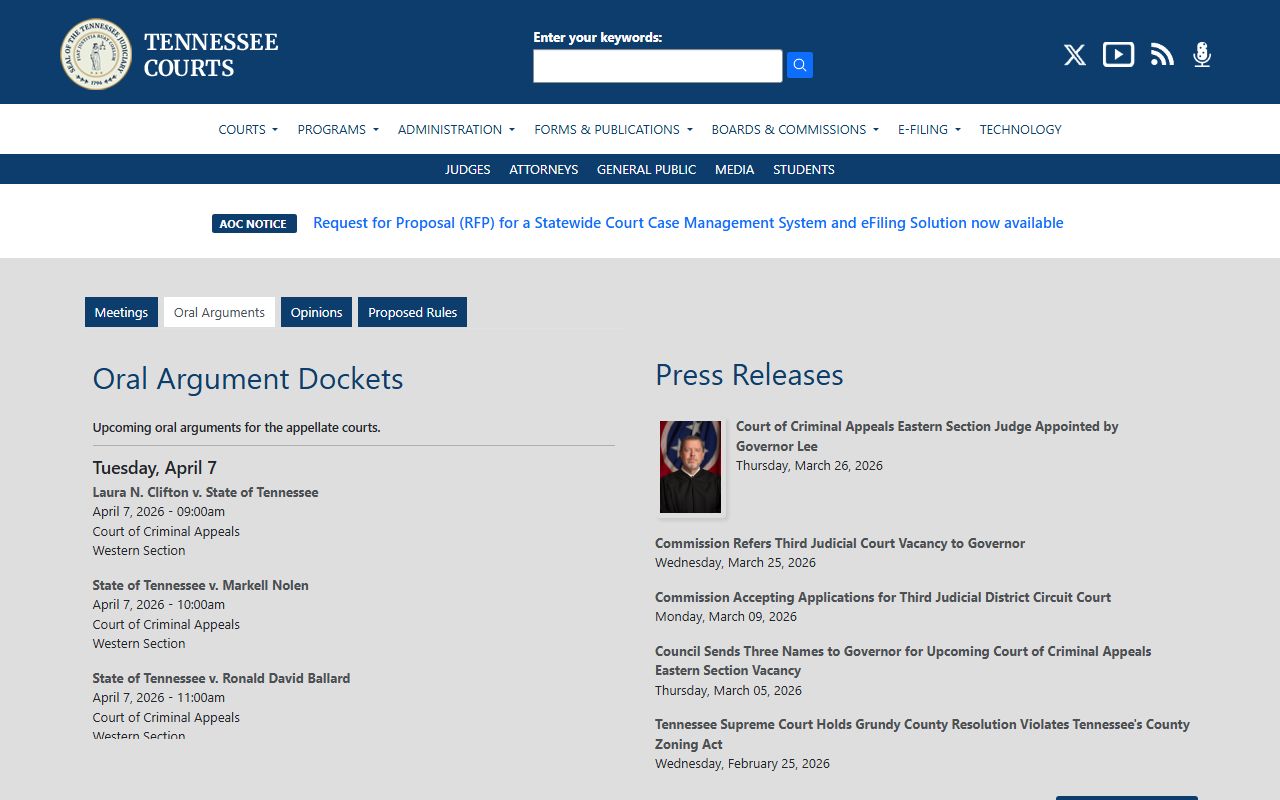
It is a reminder that the city court is separate, while the county courts hold the family file.
How To Search Chattanooga Family Court Records
Searches go faster when you bring a few facts. The party name, the filing year, and the type of order are enough to get started. If you have the case number, bring that too. The clerk office can use it to narrow the search. If you do not have a number, ask about the search fee. Chattanooga county records follow the common Tennessee pattern of $5 per name per year when the case number is not known.
In person, go to the county office that handles the record. Ask whether the file is in Circuit Court or Chancery Court. Bring photo ID and know whether you want standard or certified copies. Certified copies are often needed for another court, a government office, or a legal file. Standard copies are fine when you only need to review the terms. If the file is old, it may be in archived storage or routed through a minute room or records room before you can see it.
Mail requests can work too. Send a written request with names, case number if known, approximate date, the county, and the document type. Include payment and a self-addressed stamped envelope. If the request is broad, be ready for some delay. Courts can move slowly when a file needs to be pulled from deep storage or checked for confidential pages.
- Full name of one party
- Approximate filing year
- County and court if known
- Case number if you have it
- Whether you need a certified copy
Chattanooga Family Court Records Fees And Copies
Copy fees in Chattanooga follow the Tennessee county pattern. Standard copies cost $0.50 per page. Certified copies cost $5 plus $0.50 per page. Those fees apply when you ask for a court record copy from the county side. The city court may have its own small fees for city matters, but those do not replace the family court record process. The county clerk is still the right office for the real file.
Payment methods commonly include cash, check, money order, and credit card. In some Tennessee clerks, credit card use includes a processing fee. If you are mailing in a request, make sure the payment matches what the clerk asks for and that your envelope includes a return address. That sounds basic, but it keeps a request from being delayed for a fixable problem.
When a record contains private data, the public copy can be redacted. Social security numbers, financial account numbers, and details about minors are often removed. In family court work, that is normal. It keeps the record useful while still following Tennessee privacy rules. If you need a full copy as a party, ask the clerk what is available and whether any court order is needed.
For older records, the Tennessee State Library and Archives can help with search direction. For current records, the county office is still the main source. Knowing which one to use saves a lot of time.
This Chattanooga image comes from Tennessee state resources and works as a second visual for family court records that may move between the county office and state history resources.

It fits the way Tennessee records often work in practice: city court for city cases, county courts for family files, and state sources for broader research.
What Chattanooga Family Court Records Show
Family court records in Chattanooga can include divorce complaints, answers, agreed orders, custody findings, child support worksheets, parenting plans, and final decrees. Some files also contain later motions or post-judgment changes. The file grows as the case grows. A simple agreed divorce may be short. A contested custody case may be long and dense. That is normal. It is also why case type matters when you place a request.
Hamilton County Chancery Court can also handle equity matters tied to family law, while Circuit Court handles other civil divorce work. That split can show up in the record itself. You may see the same family matter across two courts if a case has related equity issues or later changes. That is one reason county clerk offices ask for the court name if you know it.
Under Tennessee law, family court records are generally public, but juvenile and adoption files are not. Under T.C.A. § 36-4-104 and related divorce rules, the record can also show the filing basis and residency facts. Under T.C.A. § 36-4-121, property division can add extra papers. Those details matter when the file has to prove more than a simple end date.
Some Chattanooga records are also part of the appellate trail. If a family case was appealed, the Tennessee court system may preserve later history that helps explain what happened after the county order was entered. That can matter when you need more than a first-order copy.
Chattanooga Family Court Records Access
Access in Chattanooga depends on the record type. The city court is easy to rule out because it does not handle family law. The county clerk and chancery offices are the real targets. When you show up, ask for the file by party name, court, and year. If the file is old, ask whether it has been moved to storage. If it is sealed or partially sealed, ask how the office handles redacted copies. Clear questions get faster answers.
Hamilton County follows Tennessee public records rules and also keeps confidentiality limits in place for juvenile and sensitive family material. That balance is normal. It is the same balance described in Tennessee court access guidance and open courts summaries. If a file is public, you can inspect it. If it is restricted, the clerk will tell you that the law or a court order controls access.
The state archives and the Tennessee courts pages are useful when the local file path is not obvious. They can point you to the right court or the right historical record set. That is especially helpful in Hamilton County because older cases may have a longer paper trail than a simple current docket search suggests.
Chattanooga Family Court Records Help
For family court help in Chattanooga, start with the county courthouse path. The city court is not the answer for divorce or custody. Use the Hamilton County Clerk office for the main file, then use Tennessee court and archives resources if you need history, a rule explanation, or appellate follow-up. That order keeps the search focused.
If you need forms, the Tennessee courts site is the first stop. If you need legal help, the state and nonprofit resources in Tennessee can point you to family law support. If you need a record copy, the clerk can tell you whether the file is active, archived, redacted, or sealed. That is the practical side of record access. It is also the side that gets results.
Chattanooga Family Court Records are easier to find when you begin in Hamilton County and keep the request narrow.
If the file is old or you only need a state certificate, the Tennessee State Library and Archives FAQ at how to find court records and the Tennessee Vital Records page at Vital Records can help when the county office needs a second search path.