
Find Knoxville Family Court Records
Knoxville Family Court Records are kept at the county level, not by Knoxville City Court. That city court handles traffic tickets, parking issues, and city ordinance cases. Family law records such as divorce decrees, custody orders, child support papers, and adoption files go through Knox County Circuit Court and Chancery Court. The county also has records management support and archives that help with older files. If you are trying to trace a case from a few years ago or a few decades ago, start with the clerk office and then move outward to the county archives and state court tools.
Knoxville Family Court Records Quick Facts
Where To Find Knoxville Family Court Records
Knox County keeps family court records in more than one place. The Circuit Court Clerk is at 400 Main Street, Room 318, Knoxville, TN 37902, and the Chancery Court is in the Lawson McGhee Library Building at 500 W Church Ave, Knoxville, TN 37902. The county clerk handles the working files, and the Chancery side handles domestic relations and equity matters. That means your request may land in one office or the other, depending on how the case was filed.
The Knox County court system is large. It includes Circuit Court, Chancery Court, Fourth Circuit Court, Criminal Court, General Sessions, Civil Sessions, Juvenile Court, and special courts. For family law work, the Fourth Circuit Court is especially important because it serves as the domestic relations court handling most divorce cases in the county. That detail matters when you are asking for a decree, a parenting plan, or a custody order. If you go to the wrong clerk, you lose time. If you start with the correct court, the search is much smoother.
The Knox County city and county sites both help. Knoxville City Court explains the municipal side, while the county court pages and records management site explain the file side. If a record has been retired, Knox County Archives at the East Tennessee History Center can help with older non-current records, including historic marriage and divorce records. That is a strong lead when a family case is old and the courthouse file is no longer on the active shelf.
Knoxville City Court And Family Law
Knoxville City Court does not handle family law cases. It is a municipal court. That means it deals with city ordinance issues and traffic matters, not divorce or custody. The city court location is the City-County Building at 400 Main Street, Lower Level, Room L7, Knoxville, TN 37902. The phone number listed by the city is (865) 215-2176. If your search is about a family case, the city office is not the end point. It is only the first stop if you are checking what the city court does.
For the actual family court record, go to Knox County Circuit Court Clerk or the Chancery Court office. The Circuit Court Clerk contact listed in the county materials is Michael P. Clayton, and the office email is circuit.courtclerk@knoxcounty.org. Knox County also notes a phone number of (865) 215-2340 for civil matters. That office can direct you to the right division and explain whether the file is active, archived, or available online.
Read more at Knoxville City Court and Knox County courts. For county record handling, the records management page shows how inactive files are stored and delivered around county offices.
Public access in Tennessee is broad, but not absolute. Juvenile cases stay confidential. Adoption records are sealed. Non-public personal data may be removed from copies. CTAS and the Tennessee courts both explain that a judge can restrict access when privacy outweighs public need. That is normal. It is not a sign that the record is lost.
This Knoxville image comes from Tennessee courts and is a useful visual cue for local family court record research.
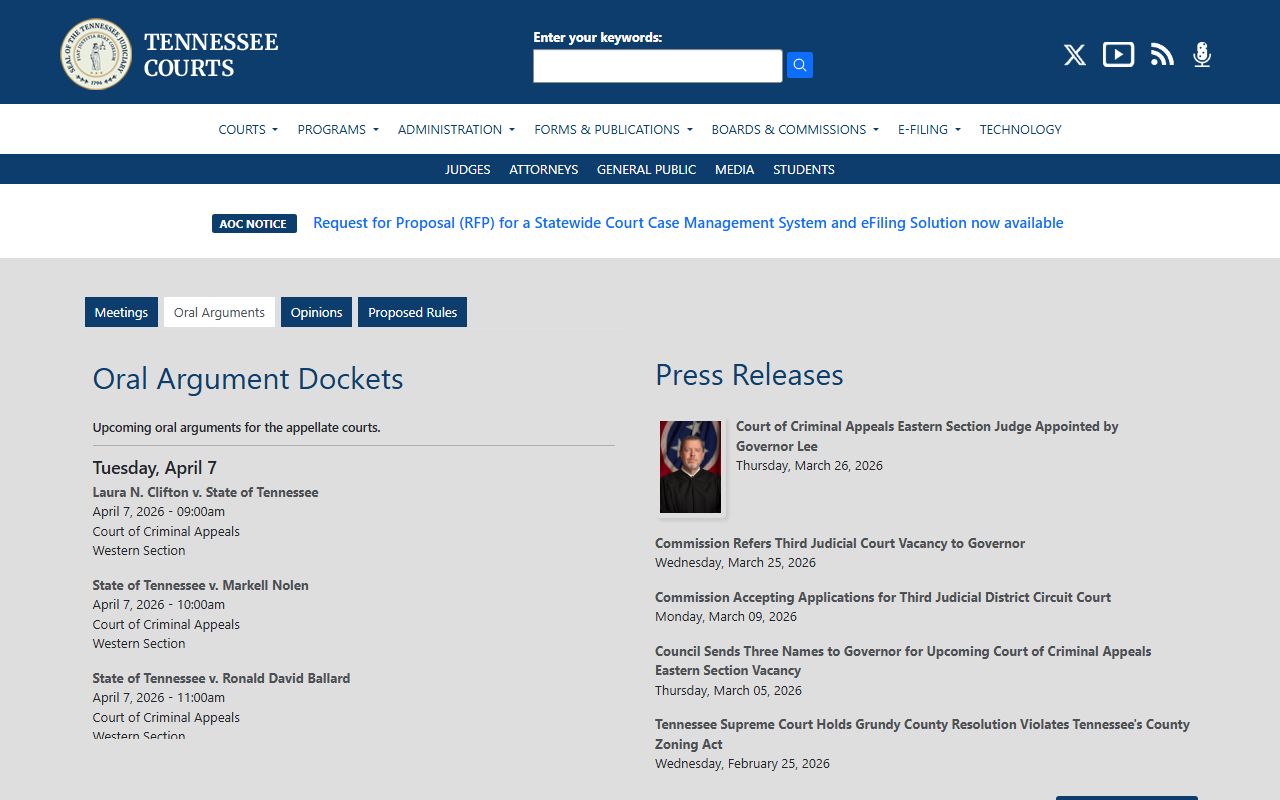
The county offices, not the city court, are where Knoxville residents usually find the full case file.
How To Search Knoxville Family Court Records
Start with the basics. A full name, approximate filing date, and the type of family case usually get the search moving. If you already have the case number, that shortens the process a lot. Knox County also has an online records portal through the Fourth Circuit Court Clerk website for filings dating back to November 2017. That online tool is useful for recent matters and for checking a case before you make a trip downtown.
For in-person searches, bring photo ID and ask for the right office. If the file is a divorce with property issues, the Chancery Court may be the best fit. If it is a divorce or domestic matter handled by the domestic relations court, the Fourth Circuit Court records path may be the one you need. The clerk can explain the shelf location and whether the record is kept in the office or routed through records management.
Mail requests are possible too. Include the names of the parties, the approximate date, the case number if known, and the document type you want. Send payment and a self-addressed stamped envelope. If the record is stored off site, the office may need extra time. That is where Knox County Records Management helps, because it provides storage, retrieval, and controlled delivery of inactive files to county facilities.
- Party names and any aliases
- Approximate year filed
- Case number if available
- Document type needed
- Whether you need a certified copy
Knoxville Family Court Records Fees And Copies
Copy pricing in Knoxville is straightforward. Standard copies cost $0.50 per page, and certified copies add a $5 charge. If you ask for a certified order or decree, tell the clerk before the file is pulled. That keeps the request clean and avoids extra back-and-forth. Many offices can also accept cash, check, money order, and sometimes credit cards, though credit card use can include a fee.
The county system has an advantage for older work. Knox County Records Management stores inactive documents in secure, climate-controlled space and delivers files to the City-County Building and other county sites on a daily schedule. That means a record does not disappear just because it is no longer active. It may simply live in another county room. The records management page explains that access is still available when the law allows public inspection.
Knox County Archives add another layer. The East Tennessee History Center holds non-current county records, including probate records from 1789 and marriage and divorce records from 1792. For family court research, that can be the key to a very old record trail. If you need to prove a marriage, trace a divorce, or locate a long-closed family matter, the archive may be the right next step after the clerk office.
If you need a state divorce certificate rather than the full decree, the Tennessee Department of Health, Office of Vital Records can issue that record. The certificate is shorter, but it is sometimes enough for a job change, name update, or remarriage. The county file is still the better source when you need the complete case history.
This Knoxville image comes from Tennessee state resources and helps show the wider records system Knoxville residents can use when the county file is archived or sealed in part.

State tools, county archives, and the clerk office can work together when a family file is old or split across courts.
What Knoxville Family Court Records Show
Knoxville family court records often include the complaint, response, agreed order, parenting plan, child support worksheet, custody order, and the final decree. Some cases also include post-judgment motions or modification requests. The exact file depends on the case. A plain divorce may have a thin file. A custody fight can have a thick one. Knowing that helps set your expectations before you request copies.
Because Knoxville is a large county seat, the file may also show which court handled the matter and which clerk office held the record. The Fourth Circuit Court structure is important here. It is the domestic relations court for most divorce cases in Knox County, while the Chancery side handles equity matters and some family law files. If a record was moved into records management, the file trail may still be visible through the office that managed the transfer.
Under T.C.A. § 36-4-104, Tennessee filing rules depend on where the grounds arose and how long a spouse lived in the state. Under T.C.A. § 36-4-101, both no-fault and fault grounds can support a divorce. Those rules shape the file, because the complaint and later orders reflect what was pled and what the court approved. Under T.C.A. § 36-4-121, property division is equitable, not automatic. That can add financial papers to the record.
Some family files stay public in part and restricted in part. Juvenile materials are confidential. Adoption files are sealed. Social security numbers and bank account numbers are usually removed from public copies. If you ask for a copy and get a redacted version, that is standard Tennessee practice, not a sign of a bad search.
Knoxville Family Court Records Access
Access in Knoxville follows Tennessee public records rules and local clerk practice. The city page can help you confirm municipal court scope, but family records live at the county level. The county clerk offices usually want the requester to be specific. Name the parties. Name the record. Say whether you need a certified copy. That is the fastest path through a public records request.
For older records, Knox County Archives and the Tennessee State Library and Archives are both useful. The state archives page explains that court minutes and indexes are available in many cases and that some research can be done by date span. That matters when a file has been moved from active storage or when the court name changed over time. Knoxville has a deep paper trail, and some of it now sits in archive storage rather than at the front counter.
When a court record is sealed, the clerk can tell you that a judge order controls access. If a party asks for a restricted order or an adoption file, the clerk cannot simply ignore the seal. The right move is to ask the court how access is handled and what proof or order is needed. That is true in Knoxville just as it is across Tennessee.
Knoxville Family Court Records Help
If you need more help, start with the Knoxville City Court page, then move to Knox County courts and Records Management. The city page tells you the municipal court scope. The county pages tell you where the real family file lives. The Tennessee court system and the state archives round out the search when the case is old or has moved. That mix is often enough to solve the problem without calling three offices at random.
If you are trying to figure out which paper to ask for, think in terms of the final result. Do you need proof of divorce? Ask for the decree. Do you need the custody terms? Ask for the order or parenting plan. Do you need to prove a name change? Ask whether the decree has the right language. Small details like that save time and reduce mistakes.
Knoxville family court records are easiest to find when the request is narrow and tied to the right office. The clerk can do the rest.
When the county file is old or you need a Tennessee certificate instead of the decree, the Tennessee State Library and Archives FAQ at how to find court records and the Tennessee Vital Records page at Vital Records are useful next steps.