
Search Rhea County Family Court Records
Rhea County Family Court Records are kept through the Circuit Court Clerk and Chancery Court in Dayton. If you need a divorce decree, custody order, or child support file, the county courthouse is the best first stop. The county follows the normal Tennessee court structure, so the right office depends on the case type. Once you know the court and the year, the search gets easier. Dayton is the county seat, and the clerk office there handles the active records path.
Rhea County Quick Facts
Rhea County Family Court Records Overview
Rhea County maintains Circuit Court and Chancery Court for family law matters. The Circuit Court Clerk keeps records of court proceedings, and those files are public unless a judge seals them. That is the baseline rule in Tennessee. The county website at rheacountytn.gov gives local direction, and CTAS helps explain how county offices manage open court records.
Chancery Court handles domestic relations matters, and Circuit Court handles divorce, custody, and child support matters. That means a family file can live in more than one place depending on how it was filed. Rhea County appellate matters go to the Eastern Division, and the public case history system includes Rhea County appellate records. If a case was appealed, the state record trail matters as much as the county file.
Note: Public access is the default, but juvenile and sealed records still have limits.
How to Search Rhea County Family Court Records
The fastest way to search Rhea County Family Court Records is to visit the clerk's office during business hours. Bring the party names, the approximate filing year, and the case number if you have it. A focused request helps the clerk match the right file fast. If you are unsure which court handled the matter, say what kind of case it was and let the office route it. That is usually quicker than guessing.
For online help, use tncourts.gov for public case history and appellate records. The Tennessee State Library and Archives can help with older Rhea County records, and the TSLA records FAQ at sos.tn.gov/tsla/faqs/how-do-i-find-court-records explains how to ask for historical court minutes. That is useful when a family case is old enough to be in archive storage instead of on the active shelf.
Rhea County follows the standard Tennessee rule on public access. Open files are available unless sealed or confidential. That means the clerk can usually give you the record if you make a precise request. If you only know a surname, ask whether a name search can be done and what year range to use. If you know the decree date, that is even better.
Bring these details if you can:
- Full names of the parties
- Approximate filing year
- Case number or order date
- Whether you need a certified copy

The county research also notes that photo ID is required for record requests. That matters if you want to leave with copies the same day. A certified copy is usually the safer choice for formal use. A plain copy is fine if you are only reviewing the file. The clerk can help you choose the right version once you say why you need it.
Rhea County Family Court Records Fees
Fees in Rhea County follow Tennessee court practice. Standard copies are often 50 cents per page, and certified copies are $5 plus 50 cents per page. If you do not know the case number, a search fee may apply. That is why the best request is the one with names, year, and court. The more exact the request, the less likely it is that the office has to do a broad search.
Office hours are typically Monday through Friday, 8:00 a.m. to 4:30 p.m. The county research says payment can usually be made with cash, check, money order, and sometimes credit card. If you need a certified copy for another agency, ask for it before you pay. The clerk can tell you whether a plain copy is enough or whether the receiving office expects a certified version with seal and signature.
Rhea County is in the 12th Judicial District. That district context matters because local procedure and district practice work together. If the file is old, the Tennessee State Library and Archives may help with the historical record. If the file is current, the clerk office is the right place. Fees and access are separate questions, but both depend on the same careful request.
Note: Ask about the search fee before you submit a name-only request.
Rhea County Courthouse Access
Dayton is the county seat, and that is where Rhea County courthouse access begins. Circuit Court keeps family law records, Chancery Court handles domestic relations matters, and the clerk office manages the public record path. If you know whether the matter was divorce, custody, or support, say that first. The office can route you faster when the request is specific. That helps in a county where the courthouse may have more than one place to start.
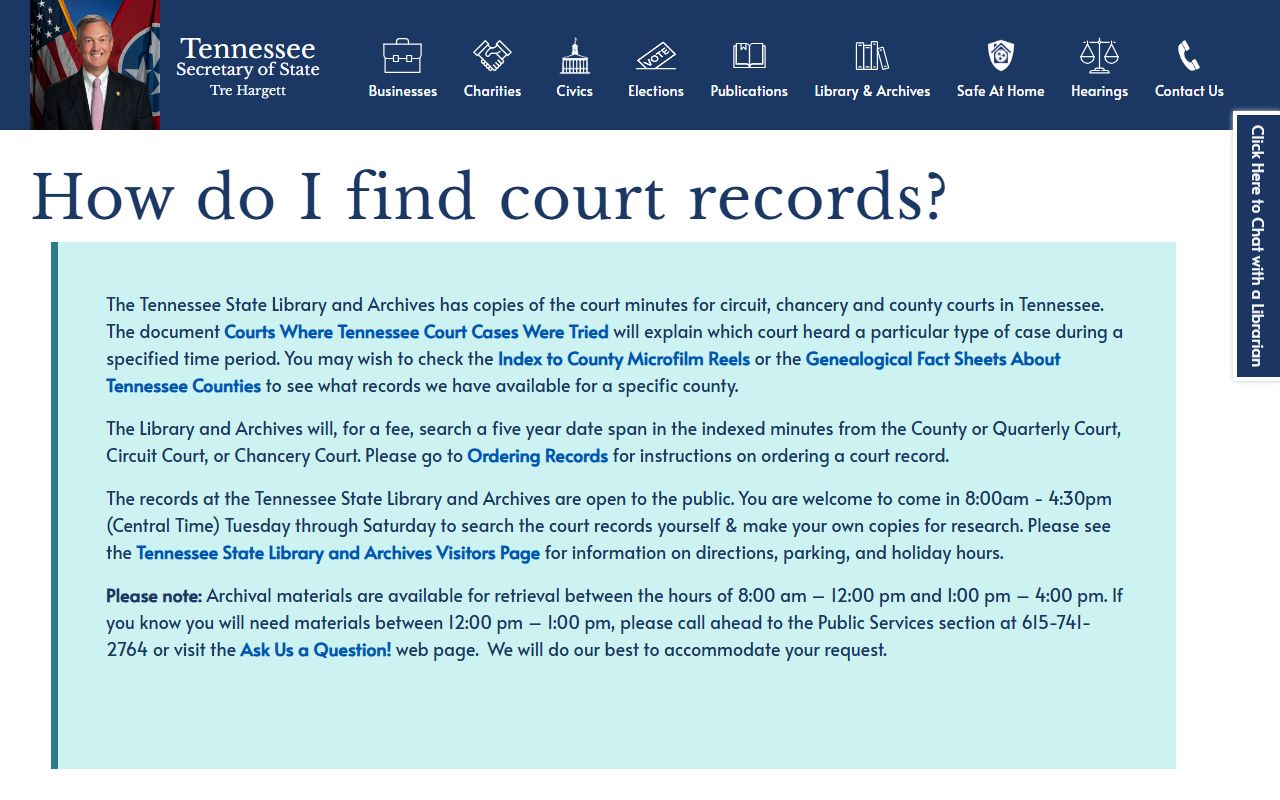
The manifest does not give a second local county image for Rhea County, so a state resource image is the right fallback. The county and state sources still work the same way. The clerk handles the active file. The state court system keeps appellate records. TSLA can help with older records. When you use all three, the search gets much cleaner.
Some family files are public, but some pages inside them are not. Juvenile records stay protected, and a judge can seal parts of a file. That means the clerk can usually give you the open record, but not everything in every case. The law sets that line, not the office counter.
What Rhea County Family Court Records Show
Rhea County Family Court Records can include divorce decrees, custody orders, child support orders, motions, and later changes. The file may also show service papers, hearing dates, and the judge's final order. That is useful when you need to prove what happened on a specific date or when a later agency asks for the record. A final decree tells you the result. The rest of the file tells you the path.
That path matters in family cases because the first order is not always the last order. Support changes. Custody changes. A decree may be followed by later motions or agreed orders. The clerk can usually tell you whether the file is open and which version of the record you need. If you want the file to stand on its own, ask for a certified copy. If you only need to read it, a plain copy is fine.
Open access is the default under Tennessee law, but it is not unlimited. Juvenile and sealed records stay restricted. Rhea County follows the same rules as the rest of the state, so you should expect access with boundaries. That is normal and predictable if you ask the right way.
- Divorce decrees and related papers
- Custody and child support orders
- Domestic motions and agreements
- Appellate case history entries
- Certified copies for formal use
Rhea County State Help
State help can fill the gaps when the county file is old or incomplete. tn.gov gives statewide family-law context, and tncourts.gov gives public case history and forms. If you are tracing an older Rhea County matter, the Tennessee State Library and Archives is the next place to check. Archive search can be the best route when the active courthouse set is thin.
Rhea County follows Tennessee's statewide openness rule. Under T.C.A. § 10-7-503, court records are generally public unless sealed or confidential. That means your request should still be specific, but it also means the default is access. Use the county office first, then the state portal, then the archives if you need older history or appellate information.
Note: If the record is archived, the file may still exist even if it is no longer on the active shelf.
Browse Tennessee Counties
Rhea County is one part of Tennessee's family records network. Use the county directory if you need another courthouse page.