
Smith County Family Court Records
Smith County Family Court Records are used to find divorce decrees, custody orders, child support files, and other domestic relations records in Carthage. Smith County has a detailed research block that makes the county easy to place in the Tennessee court system. Circuit Court and Chancery Court both handle family law matters, and the clerk office is the source for public files. If you know the case name or number, the search can move quickly. If not, the clerk office still gives you a route through the courthouse.
Smith County Quick Facts
Smith County Family Court Records Offices
Smith County operates Circuit Court and Chancery Court for family law matters. The county seat is Carthage, and the Circuit Court Clerk maintains records of all court proceedings, including family law cases. The research says records are public unless sealed by court order, so the clerk office is the first stop for any search. That local office is the place to ask for divorce decrees, custody orders, or child support records.
The county website at smithcountytn.gov is the local government source named in the research. It may be thin in practice, but it still gives you county context. The Tennessee courts site at tncourts.gov gives you the state directory and the appellate path. Smith County is in the 15th Judicial District, and the public case history system includes appeals from the county.
Smith County also has the usual access rules. Office hours are Monday through Friday, 8:00 AM to 4:30 PM. Photo ID is required for requests. Standard copies are fifty cents per page and certified copies are five dollars plus fifty cents per page. The search fee can apply when the case number is unknown. That makes the county manageable if you come prepared.
These Smith County Family Court Records links show the local source first and the state system second.

The Tennessee state site at tn.gov is the best fallback when you need Smith County archive or family support references.
How Smith County Family Court Records Work
Smith County follows the standard Tennessee split. Circuit Court handles general civil and criminal work, while Chancery Court handles family law and equity matters. That means a divorce, custody order, or support case may be filed in one office while a related probate or equity matter sits in another. If you are not sure where the paper is, ask both offices.
The research says records are public unless sealed by court order. Juvenile files remain confidential, and sensitive family records may still be withheld. That is normal statewide. If you need a certified copy for another office, ask for it up front so you do not have to repeat the request later.
Historical Smith County court records are at the Tennessee State Library and Archives. That is useful for older divorces and long family histories. If the case went to appeal, the public case history system can show that trail too. The county file and the state record should work together, but they are not always in the same building.
Smith County Family Court Records are easiest when you use the county office and the state court site as one search path.
Smith County gives you the right county seat, the right district, and the right route if you keep the offices straight.
The first Smith County Family Court Records image below comes from the county records side of the research.
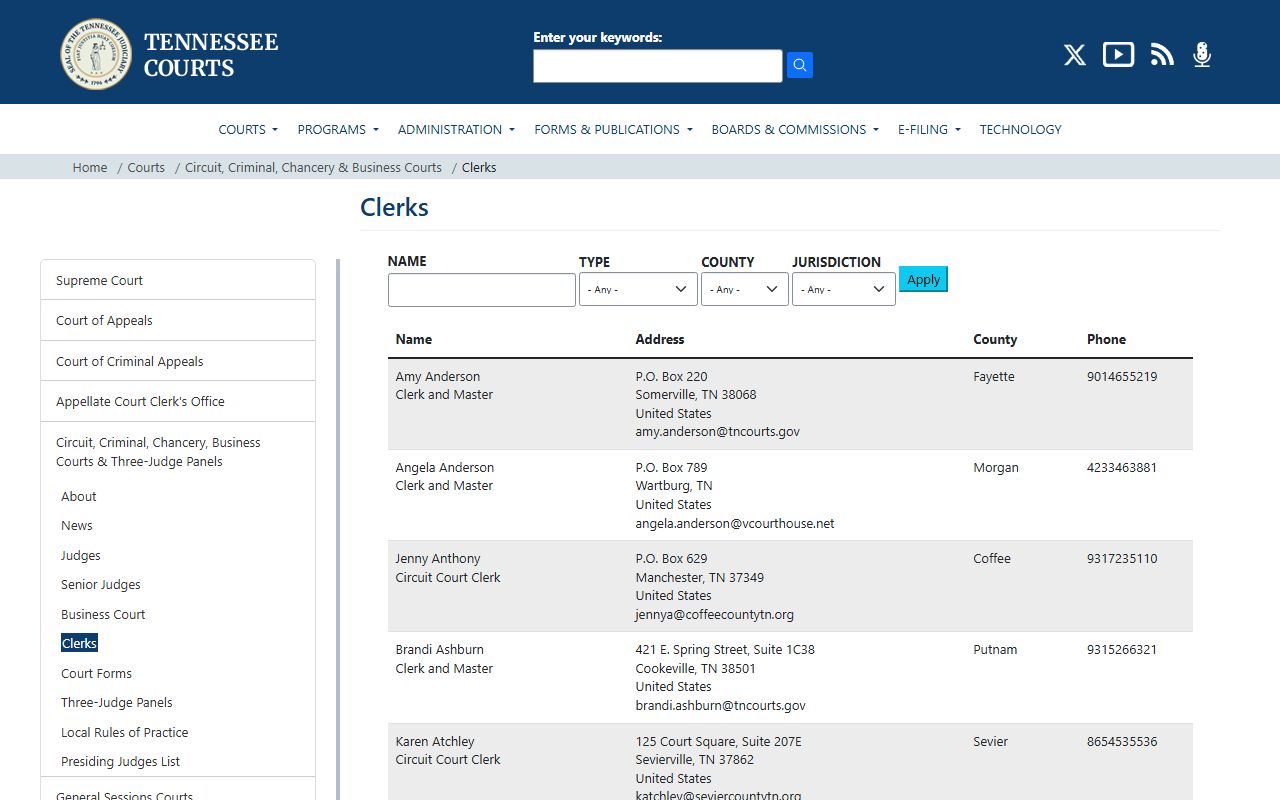
The Tennessee courts site at tncourts.gov is the best statewide fallback for Smith County appeals and clerk routing.
Smith County Family Court Records Access
Access in Smith County is direct. Visit the clerk office during business hours with the party names, the filing year, and the case number if you have it. The office can tell you whether the file is open, sealed, or still active. Because the county is in the 15th Judicial District, appeals may later move into the state system, and the Tennessee court history path becomes useful.
The county research also says the clerk office can provide certified copies and that payment methods may include cash, check, money order, and sometimes credit cards. That makes a records request more predictable. If the file is older, the State Library and Archives may be the better backup. That is especially true when you are dealing with a long-closed family case.
Smith County family records are not all the same. Divorce decrees, custody orders, and child support orders are the most common records, but the clerk office can also point you to related filings if they are part of the same case. That helps keep the search focused.
Note: Smith County family files are public by default, but juvenile and sealed records still stay closed.
The second Smith County Family Court Records image below ties the local file to the state-side search trail.
The Tennessee state site at tn.gov is a useful fallback for Smith County archive and family support references.